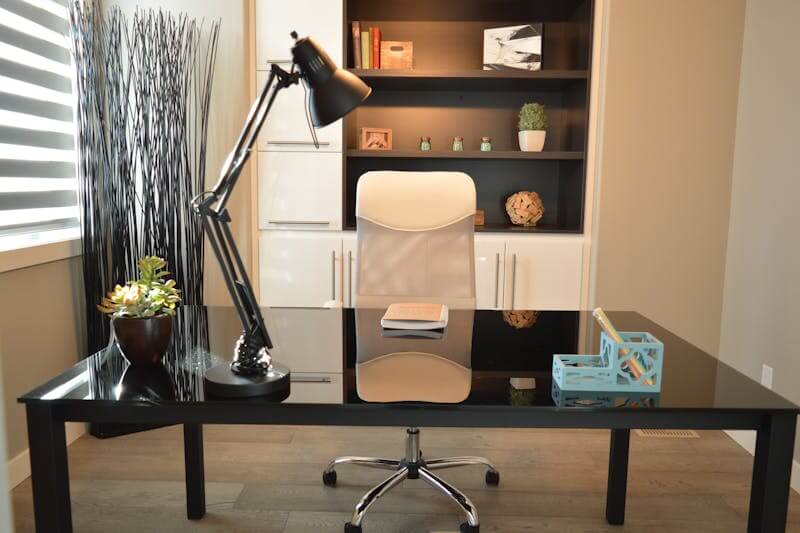
Outfitting a spare room to become a fully functioning professional space is one of the wisest investments any budding business owner can make.
The recent explosion in popularity of home based businesses means more people than ever are setting up their very own home office HQ.
The problem…
A lot of home offices are set up entirely wrong. Throw a desk in the corner. Hack the old dining chair from the kitchen. Run an extension lead. Hey presto, your office is ready.
Wrong.
A home HQ requires forward planning, carefully considered choice of furniture and a layout designed to enhance productivity. Here’s the secret…
You don’t need to spend a lot of money to get it right.
A Sneak Preview Of The Action To Come:
- Why setting up your office the right way matters
- Essential furniture pieces for any home HQ
- Smart layout and positioning tips
- Budget friendly and thrifty setup hacks
Setting Up Your Office The Right Way Matters
Think about where you do your best work.
It’s not usually perched over a kitchen table with laptop balanced on one knee, or hunched on the edge of your bed with a netbook.
That’s because our brains recognise a dedicated workspace when we sit down at one.
A recent Stanford study showed a 13% increase in productivity for remote workers versus office staff. That’s a major jump just from being in the right environment.
But it’s not just about having a room to work in…
The actual furniture you choose has a huge impact on your performance. After all, you’ll be spending at least a few hours a day there. Select your office desks for sale carefully. Does it complement the space you have? Do you like the design? Think about it carefully. If you buy the wrong one you’ll regret it. A desk too small for your computer and paperwork feels cramped and restricting. Too big and you’re wasting valuable floor space.
Essential Furniture Pieces For Your Business HQ
There are only a few essential pieces to setting up the perfect home office HQ. Nail these, and everything else will flow naturally.
The Desk
Ah, the good old humble desk. The literal platform upon which every business task will be conducted. A good office desk should have sufficient surface space for computer, paperwork and any equipment you use for work.
Height is also important. The average standard desk height is 73-76cm. Adjustable height desks are becoming more popular for those who like the idea of swapping between sitting and standing throughout the day.
Material is worth considering too. Solid wood gives the look of a professional office and is more durable. Metal desk frames offer a modern industrial aesthetic. Laminate is a good mid-range value choice with options to suit every budget.
The Chair
Don’t skimp on your office chair. Don’t even think about it. A study from the Human Factors and Ergonomics Society found a 15% increase in productivity for those who work in ergonomically designed spaces. Your office chair is the single biggest factor in that.
So what to look for?
- Adjustable seat height
- Lumbar support
- Armrests that don’t interfere with desk surface
- Breathable materials that remain comfortable all day
Buy the most expensive chair you can afford. You’ll save the money back in physio bills. Not a joke. Bad posture and backache from a poor quality chair is one of the most common complaints of those working from home.
Storage Solutions
No office is fully complete without some level of storage to keep the clutter under control. Filing cabinets, shelving units and drawer organisers keep your work area tidy and more efficient.
Ask yourself first what you actually need to store. Documents? Equipment? Consumables? Plan your storage needs based on what you really have, not what you think you need.
Smart Layout And Positioning Tips
The layout of your office and positioning of your furniture are just as important as the actual items themselves.
Positioning Your Desk
The position of your desk is the single most important consideration in office layout. Start with this, then plan everything else around it.
Natural light is your friend. Position your desk near a window but don’t put your screen directly in front of it. Glare washes everything out and strains the eyes.
Side lighting is best. You get the benefits of daylight without the problems with your screen.
Create Zones
In even a small room, you can delineate zones to create different areas for different tasks.
- Work zone: Desk and computer
- Meeting zone: Small table and chair for video conferencing
- Storage zone: Filing and storage supplies
Mentally separating these activities is proven to help concentration and focus.
Leave Room To Move
Don’t pack your office furniture in right up against every wall. Leave space for circulation. The extra room might seem like a waste but it makes the room feel bigger and more open, which is great for your state of mind.
Budget Friendly And Thrifty Setup Hacks
Funding a startup business means watching every penny you can. Here are some ways to kit out your HQ on a shoestring budget.
Prioritise Essentials
Invest in the items you will be using most. That means desk and chair are the number one priority. Desk accessories and decoration can wait.
Look At Second-Hand Options
Used furniture is often high quality that’s been gently used for a few years, and comes at a fraction of new price. Check local classifieds and office clearance sales to pick up a good quality desk or shelf that still has years of use left.
Buy Once, Buy Right
Buy cheap and it’ll probably break quickly. Tempting to save money up front, but the cost of replacing a cheap broken desk chair twice, is more than buying a good quality one in the first place.
Start Simple, Then Expand
Start with the bare minimum. Add to your office as your business grows. This lets you see what you actually need before spending money on extras you don’t.
Making It Professional
Your home office is a direct reflection on you and your business. Even if your clients never visit, the space will have an impact on how you feel about your work.
Keep it clean. Keep it tidy. Spend on a desk and chair that make you feel like a professional rather than someone working from their spare bedroom.
Good lighting, cable management and a few carefully selected accessories round things off. Plants. A good desk lamp reduces eye strain. A dedicated space for video calls with a decent chair and neutral background means you always look the part on camera.
In Conclusion
The process of turning your spare room into a bona fide business headquarters is one of the wisest investments you can make as a new entrepreneur.
It requires some planning and a bit of budget, but the core essentials are the same:
- A good quality desk that fits your space and workflow needs
- A comfortable, ergonomic chair that will stand up to long working hours
- Storage solutions to keep clutter at bay
- A smart, professional layout that maximises productivity
The returns on that investment are felt in your day to day focus, better posture and a professional mindset that will translate into every aspect of your work.
Start with the essentials. Build slowly. Your future self will thank you for creating a workspace that actually works.